From May 5 to 7, 2026, the Tunisian Energy, Water and Environment Association (AT3E), a beneficiary of the PPI OSCAN 3 program in Mubadarat, participated in the meeting of the Sahel & Sahara Interest Group (SSIG 2026), organized for the first time in Cairo, in Egypt, in collaboration with the Arab Network for Environment and Development (RAED) and Sahara Conservation.
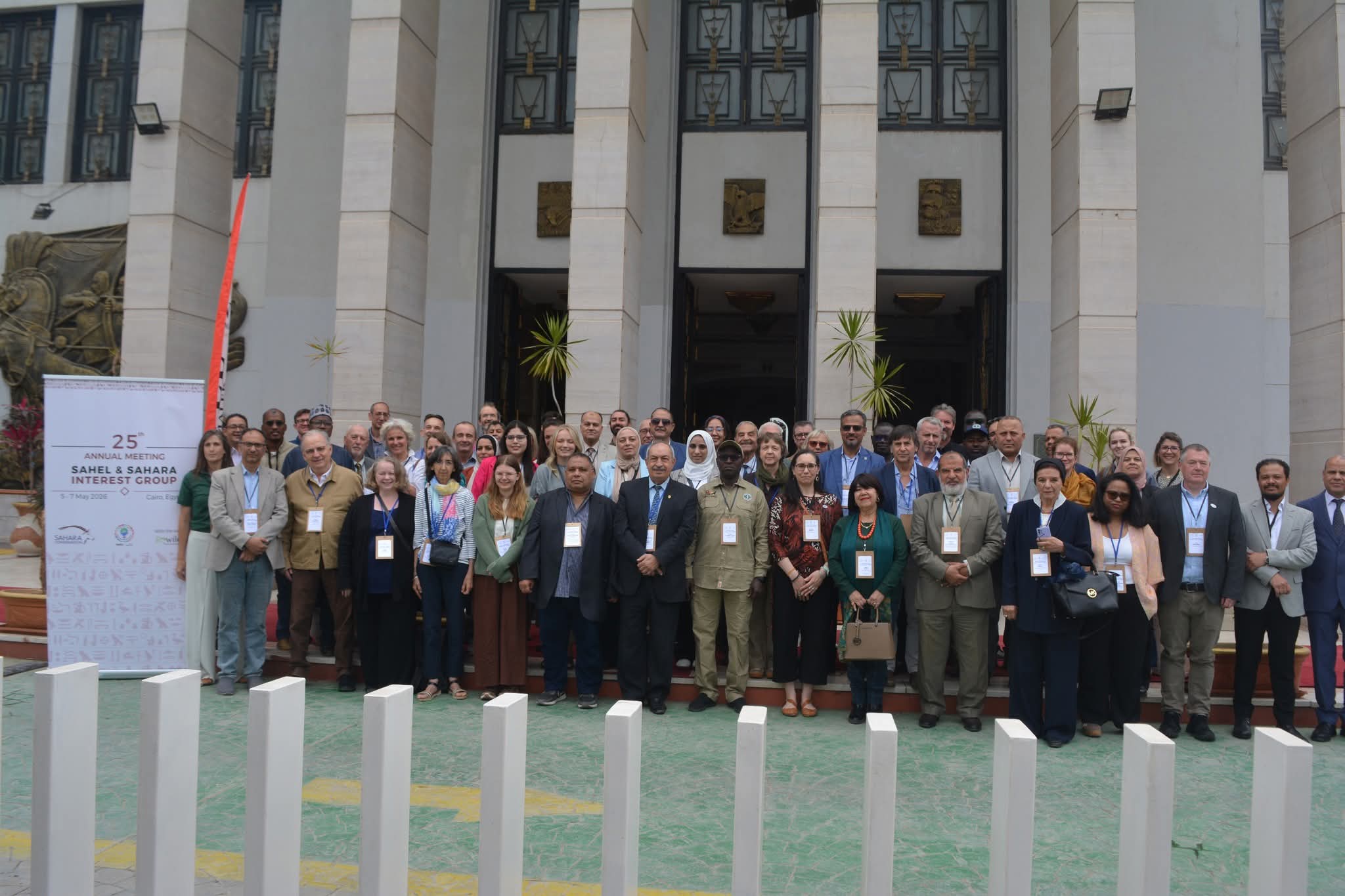
Under the theme of the resilience of arid socio-ecosystems in the face of desertification and climate change, this edition of the SSIG brought together experts, researchers, civil society organizations and institutional stakeholders around three major themes: the restoration of endangered species, the sustainability of ecosystems and the interactions between human communities, wildlife and ecosystem health.
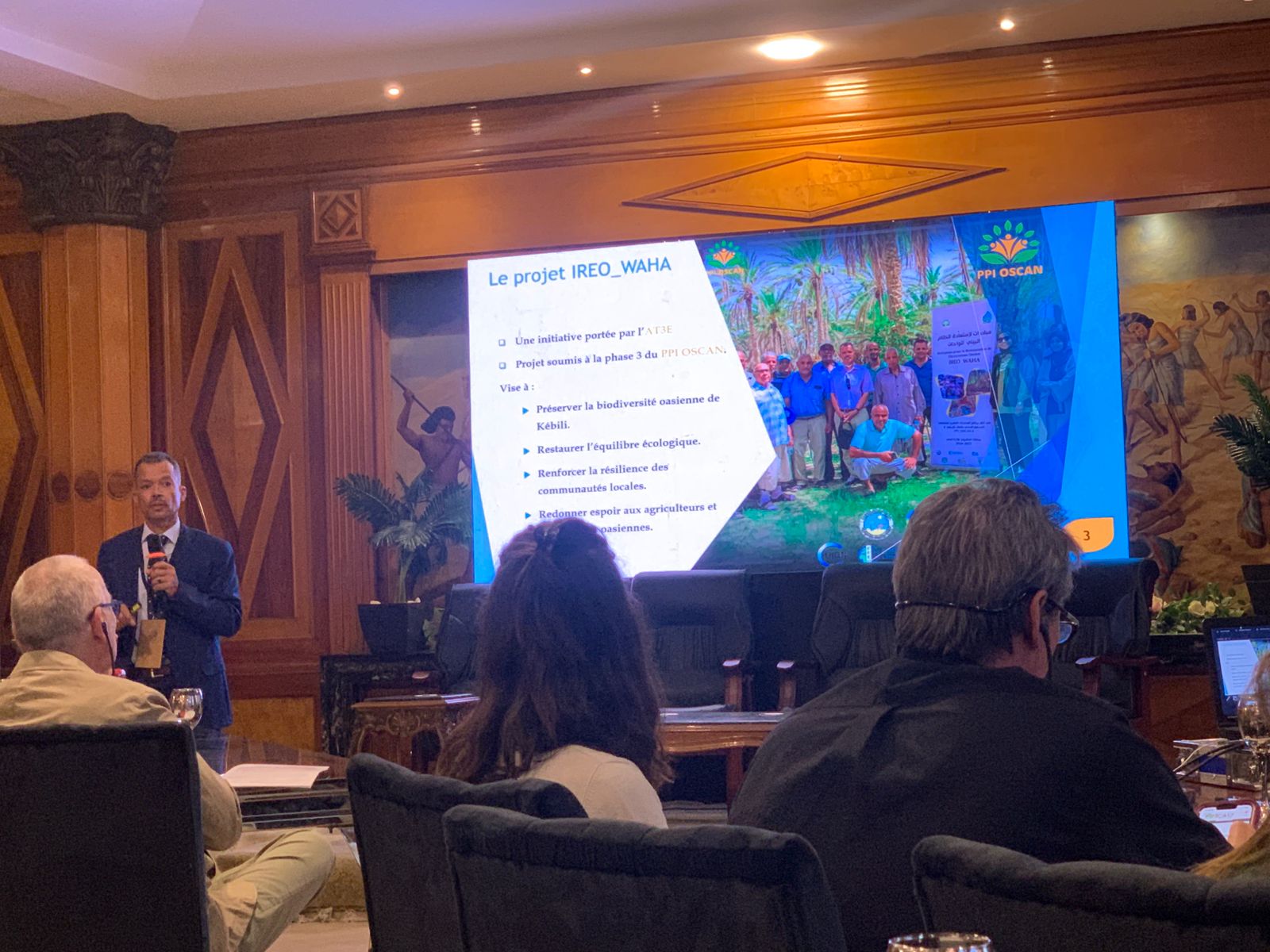
In this context, AT3E highlighted its IREO WAHA project, supported by the PPI OSCAN 3 program, which works for the restoration of oases in the Kebili governorate and the protection of their biodiversity. The project aims in particular to assess the impacts caused by date palm pests and to strengthen the resilience of traditional oasis systems through a participatory and sustainable approach.
Through the intervention of Dr. Ali Benhmidene, entitled “Oasis in rebirth: when collaboration becomes a solution”, AT3E presented the main challenges facing Tunisian oases: soil degradation, the proliferation of agricultural pests and the growing impacts of climate change. In response, the IREO WAHA project develops solutions based on cooperation between researchers, farmers, local institutions and civil society organizations.
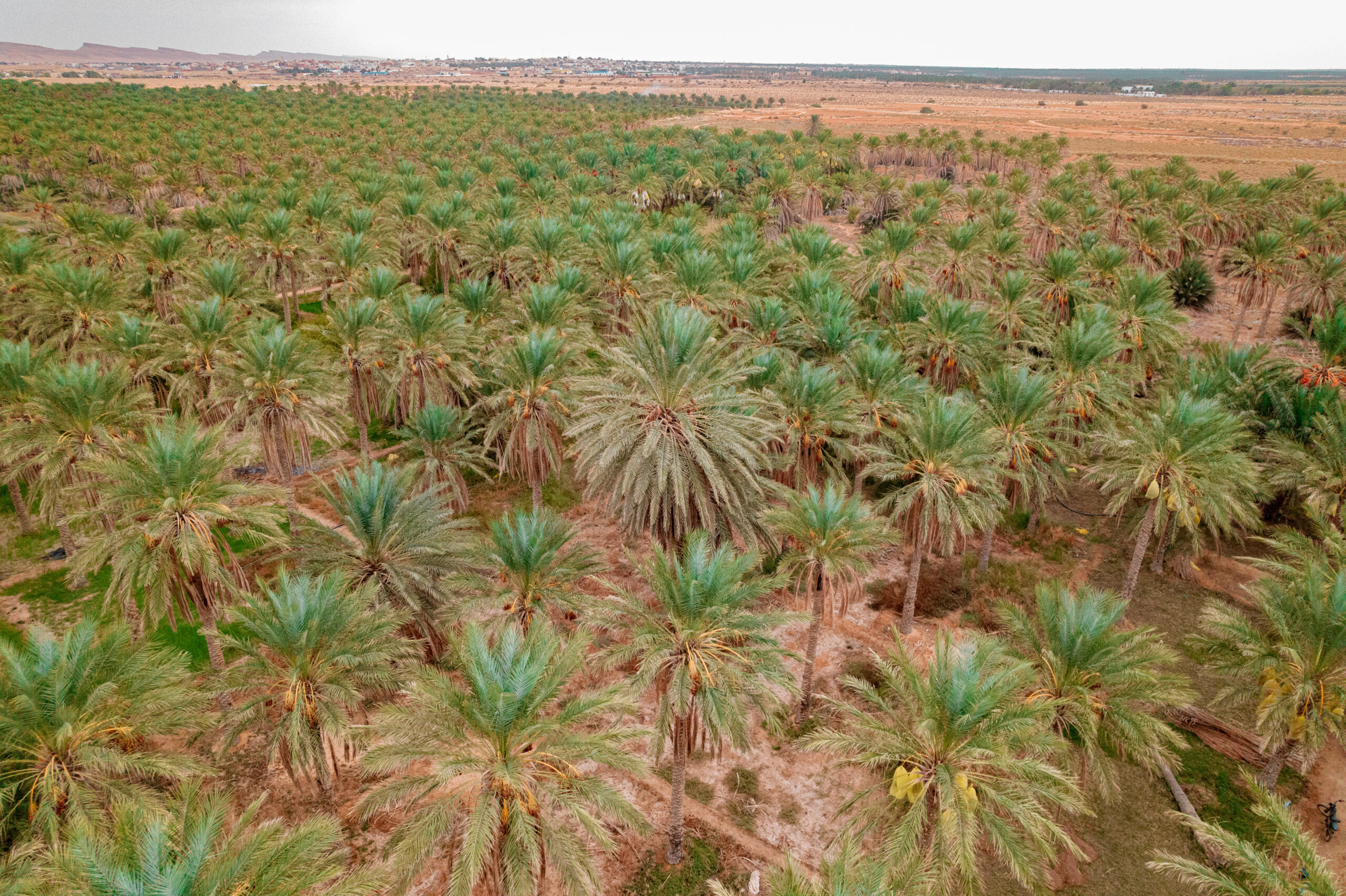
The project has notably trained 30 farmers from four Agricultural Development Groups (GDA) in the governorate of Kebili in agroecological techniques, phytosanitary care and traditional practices of management of palm groves. It also highlighted the essential role of oasis women in preserving biodiversity and transmitting local know-how
The SSGI 2026 exchanges highlighted the importance of participatory approaches and cooperation between local, scientific and institutional actors to strengthen the resilience of arid territories in the face of environmental challenges.
Through this participation, AT3E was able to highlight the Tunisian experience in oasis restoration and strengthen the prospects for regional cooperation on climate resilience and sustainable management of oasis socio-ecosystems.
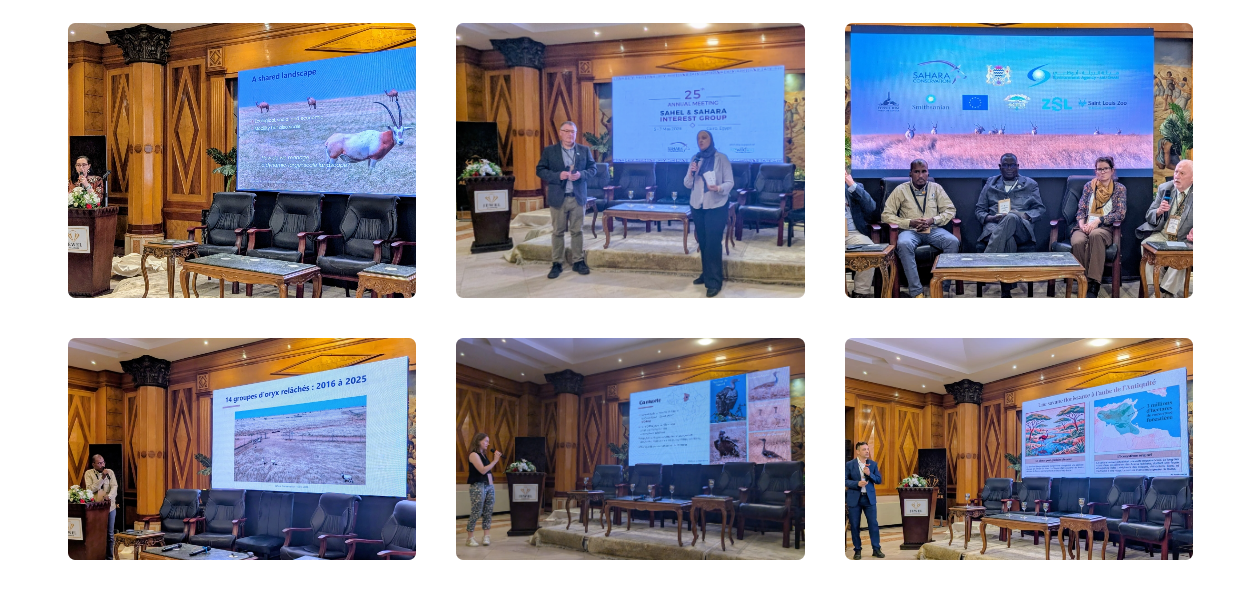
Source : sahara Conservation 2026
The SSGI 2026 thus recalled that oases are much more than agricultural areas: they represent living heritages essential for biodiversity, local communities and the fight against desertification.